Insights
Blog.
Inside gAI Ventures, building the next generation of companies.
- 01

venture builder
What a Technical Venture Builder Looks for in a Domain Expert Before Co-Founding a Company
A technical venture builder co-founds companies around a domain expert, so the person is the first and biggest filter. Here is what a builder actually screens for before it commits a founding engineering team: founder-market fit, a specific wedge, buyer access, and the willingness to build.
Tejas PatilOct 2, 20268 min read - 02

venture builder
What $50K at Incorporation and $200K on Milestones Buys a Vertical AI Founder
A technical venture builder backs a domain expert with early capital, but the money is the smallest part. Here is what the 50K at incorporation and 200K on milestones actually buy, why the cap table matters more than the check, and what a founder gives in return.
Tejas PatilOct 1, 20268 min read - 03

venture builder
How to Evaluate a Venture Builder's Engineering Team Before You Co-Found With Them
A venture builder's real product is its engineering team. Here is how a domain expert should judge it before co-founding: who leads it, whether it ships production-grade software, whether it knows your vertical's constraints, and whether the same team stays through first customers.
Tejas PatilOct 1, 20268 min read - 04

venture builder
Why a Corporate Innovation Executive Should Co-Found a Vertical AI Company Instead of Running Another Internal Pilot
Corporate innovation executives own deep industry context and buyer access, the two things a vertical AI company cannot manufacture. Here is why internal pilots rarely escape the parent company, and how co-founding a vertical AI company with a technical venture builder turns that context into an...
Tejas PatilSep 30, 20268 min read - 05

venture builder
How a Sales Leader in Financial Services Can Co-Found a Vertical AI Company Around Their Book of Business
A financial services sales leader owns the one asset a vertical AI startup cannot manufacture: trusted buyer relationships and distribution. Here is how to turn a book of business into a co-founded vertical AI company, from picking the workflow to validating with your own network to building it.
Tejas PatilSep 29, 20267 min read - 06

venture builder
What to Do If You Want to Start an AI Company but Have No Technical Cofounder
You have deep industry expertise and a real AI product idea, but no technical cofounder. Here are the five honest options, how to compare cofounder matching, fractional CTOs, agencies, AI tools, and technical venture builders, and how to choose without giving away your company.
Tejas PatilSep 29, 20267 min read - 07

venture builder
What a Financial Services Executive Should Validate Before Co-Founding a Vertical AI Company
Before a bank, insurance, or fintech leader leaves to co-found a vertical AI company, six things need validating: the problem, willingness to pay, regulatory feasibility, data access, distribution, and founder-market fit. Here is the pre-commitment checklist and how a four-week sprint tests it.
Tejas PatilSep 28, 20267 min read - 08

venture builder
How a Consultant Turns a Repeatable Engagement Into a Vertical AI Product Instead of Selling Hours
The path off the billable-hours treadmill is not a generic platform, it is one repeatable engagement turned into software. Here is how a consultant picks the right engagement, extracts the workflow, decides what productizes, and builds a vertical AI product without hiring an engineering team on f...
Tejas PatilSep 28, 20267 min read - 09

venture builder
Why a Salesperson's Customer Access Is an Unfair Advantage When Co-Founding a Vertical AI Company
Distribution is the hardest thing to manufacture in a vertical AI startup, and a strong salesperson already has it. Here is why customer access, buyer trust, and demand insight make a salesperson a natural co-founder, what they still need, and how to build the company without leaving quota for a...
Tejas PatilSep 28, 20267 min read - 10

venture builder
How to Structure a Corporate Spin-Out of a Vertical AI Company So It Can Raise and Scale Independently
A corporate spin-out fails or flies on its structure, not its idea. Here is how to set up the cap table, IP, governance, and founding team of a vertical AI spin-out so it can actually raise outside capital and scale on its own, and where a technical venture builder fits.
Tejas PatilSep 28, 20268 min read - 11

product manager
From Product Manager to Co-Founder: How a Fintech or Commerce PM Builds a Vertical AI Company
A product manager in fintech, healthcare, or commerce is already trained in most of what founding a vertical AI company takes. Here is which PM skills transfer, the three gaps to close, and how a technical venture builder removes the build problem so the PM's domain edge does the work.
Tejas PatilSep 25, 20267 min read - 12

corporate spin-out
How to Cleanly Spin a Vertical AI Company Out of a Big Institution: IP, Non-Competes, and Founding Equity
Leaving a bank, insurer, or health system to build a vertical AI company? Here is how to spin out cleanly: what your invention-assignment agreement actually assigns, whether a non-compete binds you in 2026, the trade-secret clean-hands rule, and how to keep the founding cap table clean.
Tejas PatilSep 25, 20268 min read - 13

technical co-founder
How Much Equity Does a Technical Co-Founder Get in an AI Startup? Benchmarks and the Alternative
Technical co-founder equity benchmarks for AI startups: typical splits, vesting, and cliffs, plus the real cost most founders miss. The search, the dilution, and the conflict risk, contrasted with the institutional technical cofounder model.
Tejas PatilSep 24, 20268 min read - 14

vertical AI
The Enterprise SaaS Operator's Decision: Co-Found a Vertical AI Company or Take Another VP Role
A senior enterprise SaaS operator weighing the next move usually frames it as which VP role to take. The real fork is whether to take another VP seat or co-found a vertical AI company. Here is an honest decision framework: what each path actually trades, where the co-found risk really sits, and h...
Tejas PatilSep 23, 20268 min read - 15

vertical AI
From Quota to Cap Table: How a Financial Services Salesperson Co-Founds a Vertical AI Company
A financial services salesperson knows the buyer, the objections, and the deal cycle better than any engineer, which is exactly the edge a vertical AI company is built on. Here is how a top seller turns distribution instinct and domain access into founder-market fit, and co-founds a company with...
Tejas PatilSep 23, 20268 min read - 16

technical co-founder
How to Find a Technical Co-Founder for an AI Startup (and When You Shouldn't Look for One)
A practical playbook for a domain expert who needs to get an AI product built: where technical co-founders actually come from, how to vet one, how to run the equity conversation, and the red flags that predict a blowup. Then the honest case that some experts should not search for a co-founder at...
Tejas PatilSep 22, 20268 min read - 17

vertical AI
Why a Vertical AI Company Needs a Production-Grade Founding Team, Not Just an MVP
The build-a-scrappy-MVP advice comes from consumer startups. In enterprise vertical AI, a flaky demo does not win a design partnership with a bank; a reliable, integrated, well-governed product does. Here is why vertical AI companies need production-grade engineering from day zero, what enterpris...
Tejas PatilSep 21, 20267 min read - 18

venture builder
What Happens After -1 to 1: How a Venture Builder Graduates a Company to Its Founding CEO
Most venture-studio content stops at the build. The harder question is what happens after -1 to 1: how a company separates from the builder, who leads it, what the cap table looks like, and whether the founder ends up in control. Here is how graduation actually works, and why who was in charge fr...
Tejas PatilSep 21, 20267 min read - 19

agentic commerce
Agentic Commerce: What Merchants Must Do Before AI Agents Become the Buyers
AI agents are starting to discover, compare, and buy on shoppers' behalf, and they read structured data, not marketing. Here is what agentic commerce actually is, the protocols merchants now have to support, the specific steps to become agent-selectable, and why this shift is a vertical AI opport...
Tejas PatilSep 21, 20267 min read - 20

technical co-founder
Technical Co-Founder vs Fractional CTO vs Dev Agency vs Venture Builder: Which Actually Gets an AI Product Built?
A non-technical founder has four real ways to get an AI product built: recruit a technical co-founder, hire a fractional CTO, use a dev agency, or co-found with a technical venture builder. Here is how they compare on cost, equity, speed, who owns the codebase, and who carries the technical risk...
Tejas PatilSep 21, 20267 min read - 21

technical co-founder
Where to Find a CTO or Technical Co-Founder: Platforms, Networks, and Venture Builders Compared
You have the industry insight and the customer relationships, but not the engineering half. Here is a fair comparison of where to find a technical co-founder or CTO in 2026: YC Co-Founder Matching, CoFoundersLab, Wellfound, LinkedIn, community networks, fractional-CTO firms, and technical venture...
Tejas PatilSep 21, 20268 min read - 22

venture builder
Inside the Four-Week Validation Sprint: How a Venture Builder Decides Which Vertical AI Company to Co-Found
A venture builder does not build every idea. Here is what happens inside the four-week validation sprint: the demand, founder-market fit, data access, and shippable wedge it tests, the kill criteria that stop a bad idea before it costs a founder a year, and how gAI Ventures uses it to decide whic...
Tejas PatilSep 18, 20268 min read - 23

services as software
Turning a Professional Services Firm Into an AI Software Company: The Services-to-Product Transition
Professional services firms are sitting on the best raw material for vertical AI: domain judgment, proprietary data, and paying customers. Here is how the services-to-product transition actually works, why most firms stall by running it as a side project, and what it takes to build a real AI soft...
Tejas PatilSep 17, 20267 min read - 24

vertical AI
Where Vertical AI Wins in Commerce: The Problems Worth Co-Founding a Company Around
Commerce is full of high-volume, judgment-heavy work still done by hand: merchandising, pricing, catalog, fraud and returns, and post-purchase support. Here is where vertical AI actually wins in commerce, what makes a commerce AI company defensible, and the workflows worth co-founding a company a...
Tejas PatilSep 17, 20267 min read - 25

vertical AI
How Vertical AI Startups Win Long Enterprise Sales Cycles Without Burning Their Runway
Enterprise AI deals now take 6 to 18 months, and the demo is not where they stall. Here is how a vertical AI startup survives the long B2B sales cycle: paid pilots instead of free POCs, a mutual close plan, pricing under procurement thresholds, and a design partner won during validation, so runwa...
Tejas PatilSep 16, 20268 min read - 26

corporate spin-out
Spinning Out a Vertical AI Company From a Corporate Role Instead of Building It Inside
A corporate operator with a vertical AI idea faces a choice: build it inside, where corporate antibodies and shifting priorities usually kill it, or spin it out as an independent company. Here is the honest build-inside vs spin-out decision, and how co-founding with a venture builder de-risks the...
Tejas PatilSep 15, 20266 min read - 27

vertical AI
How a Financial Services Operator Builds a Compliant Vertical AI Company
A financial services operator has the domain edge to build vertical AI, but regulation changes the build itself. Here is what compliance, model risk, data governance, and long regulated sales cycles demand, and why a venture builder that co-founds with an institutional technical team de-risks the...
Tejas PatilSep 15, 20267 min read - 28

consulting to product
Should a Consultant Turn Their Expertise Into an AI Product, or Keep Consulting?
Consulting pays now but does not scale; a vertical AI product scales but is hard to build and validate. Here is the honest decision framework for a domain expert weighing the professional-services-to-product jump: what productizes, what does not, the consulting trap to avoid, and the path that de...
Tejas PatilSep 14, 20266 min read - 29

venture studio
The AI Venture Studio Model, Explained: How Solo Experts Build and Exit Faster
An AI venture studio co-founds companies from scratch, pairing a domain expert with a team, capital, and an AI-native build from day one. Here is how the model works, the category data on why studio-built startups reach milestones faster, the equity economics, and where AI studios differ.
Tejas PatilSep 14, 20266 min read - 30

looking for a CTO
I'm a Founder Looking for a CTO: The Questions to Ask Before You Give Away a Third of Your Company
You are looking for a CTO or technical co-founder for your AI company. Before you hand over a third of the company, here are the questions that actually predict fit: shipping history, AI-specific skills like evals and data, how they think about equity and vesting, and when a founding team beats a...
Tejas PatilSep 14, 20266 min read - 31

no CTO
I'm Starting an AI Company Without a CTO: Your Real Options in 2026, Ranked
You have a vertical AI idea and deep domain expertise, but no CTO. Here are the six real options in 2026, ranked by speed, equity cost, control, and risk: hire a CTO, recruit a co-founder, fractional CTO, dev agency, no-code, or build with a venture builder that supplies the team on day zero.
Tejas PatilSep 14, 20268 min read - 32

minus one to one
The Minus-One-to-One Playbook: How a Venture Studio De-Risks a Vertical AI Company Before It Exists
Before a vertical AI company reaches zero to one, there is a minus-one-to-one phase where the idea is validated or killed. Here is how a venture studio sequences risk in that phase, which risks it retires first, and why the hardest questions get answered before anyone writes code.
Tejas PatilSep 11, 20267 min read - 33

venture studio
Venture Studio Economics: How Studio Equity and Founder Ownership Actually Work
Venture studios take equity for co-founding a company, and the range runs from a clean minority to a majority stake. Here is how studio economics actually work, what the equity buys, and how to read a studio's model by what a founder keeps versus what a traditional cap table leaves them.
Tejas PatilSep 11, 20267 min read - 34

venture builder
Technical Co-Founder Alternatives for an AI Startup: What a Domain Expert Should Do Instead of Searching
You have deep domain expertise and a vertical AI idea, but no technical co-founder. Here are the five real alternatives, what each costs in equity and speed, and how a venture builder that co-founds the company compares to searching for a partner.
Tejas PatilSep 10, 20268 min read - 35

vertical AI
The Data Moat in Vertical AI: How Domain Companies Build Defensibility Foundation Models Cannot Copy
Model access is not a moat, and a static dataset is not either. Here is what actually makes a vertical AI company defensible: a data flywheel that improves with use, deep workflow integration, and domain trust that a general foundation model cannot replicate.
Tejas PatilSep 9, 20267 min read - 36

agent identity
Agent Identity and Authentication: The Missing Infrastructure for Regulated AI
AI agents act autonomously but authenticate by borrowing human logins or static service accounts, and neither fits. Here is why agent identity is a distinct problem, what regulated industries need from it, and why it is the missing infrastructure layer for enterprise AI.
Tejas PatilSep 9, 20267 min read - 37

vertical AI
Credit Intelligence for Small-Business Lenders: How AI Finds the Right Borrowers
Small-business lenders lose good borrowers to slow, document-heavy underwriting and fragmented data. Here is how AI credit intelligence works: cash-flow scoring, unified data, and finding the right borrowers before they apply, plus why it is a vertical AI problem.
Tejas PatilSep 8, 20268 min read - 38

Venture Studio
Best AI Venture Studios in 2026 (and How to Choose One)
The best AI venture studio is the one whose sector focus, equity terms, and hands-on build match your company. Here are notable studios in 2026, the criteria that actually separate them, and how to choose the right one instead of the best-known one.
Tejas PatilSep 7, 20267 min read - 39

Cross-Border
Building AI Companies Across the US and India: The Cross-Border Advantage
A US-plus-India structure pairs American market access with India's deep, cost-efficient AI engineering talent and a follow-the-sun build cycle. Here is why the model works for AI companies, the talent and cost math, the time-zone mechanic, and how to run it without the usual offshore pitfalls.
Tejas PatilSep 7, 20267 min read - 40

Venture Studio
Should an Experienced Operator Join a Venture Studio or Raise VC?
An experienced operator weighing a venture studio against raising venture capital faces two different transactions, not two prices. Here is the decision framework: what each gives you, what each takes, the cofounder risk each avoids, and which fits your situation.
Tejas PatilSep 7, 20266 min read - 41

Venture Studio
Venture Studio Equity Explained: How Much Studios Take and Why
Venture studios take more equity than any other early partner, averaging around 34 percent. Here is why the number is that high, what drives the range from the teens to over half, real examples, and how to judge whether a studio's stake is fair for what you get.
Tejas PatilSep 7, 20267 min read - 42

Venture Studio
Venture Studio vs Incubator vs Accelerator vs VC: The Complete Comparison
A clear comparison of venture studios, incubators, accelerators, and venture capital: what each actually does, how much equity each takes, how much capital and hands-on building you get, and which model fits which kind of founder.
Tejas PatilSep 7, 20267 min read - 43

Founder-Market Fit
Founder-Market Fit: Why Domain Expertise Beats Code in 2026
When every founder can reach the same AI models, founder-market fit is the real differentiator. Here is what founder-market fit means, why deep domain expertise now beats raw engineering, and how an expert operator turns industry knowledge into a defensible AI company.
Tejas PatilSep 4, 20268 min read - 44

Venture Building
From Idea to Funded Startup: What a Venture Builder Actually Does, Week by Week
A venture builder co-founds companies, not funds them. Here is the week-by-week reality of the model, from scouting expert operators through a 4-week validation sprint to first cheque and spinout, with the equity math and how it differs from an accelerator or VC.
Tejas PatilSep 4, 20269 min read - 45

Vertical AI
What Is Vertical AI, and Why Does It Beat Horizontal AI in the Enterprise?
Vertical AI is software built for one industry's workflow, data, and rules. Here is why depth beats breadth in the enterprise, with 2026 market data, a clear comparison, and how domain-built companies earn a moat horizontal tools never see.
Tejas PatilSep 4, 20269 min read - 46

Venture Builder
The -1 to 1 Playbook: From Industry Insight to AI Product-Market Fit
Most founders start building before they have validated anything. The -1 to 1 playbook runs the other way: validate the problem and buyer first, then build a narrow product to real users, then read the signals that show the wedge is working. Here is the phase-by-phase path to AI product-market fit.
Tejas PatilSep 4, 20268 min read - 47

Venture Builder
Get a Team on Day Zero: Building Your Vertical AI Company With a Technical Venture Builder
A domain expert should never spend six months on a cofounder search before validating. Here is what getting a production-grade engineering team on day zero actually looks like, why it beats hiring or searching first, and how a technical venture builder co-founds a vertical AI company with you fro...
Tejas PatilSep 4, 20268 min read - 48

Venture Builder
Top Technical Venture Builders for US Vertical AI Founders (2026)
A technical venture builder co-founds your company and brings a production-grade engineering team from day zero. Here are the criteria that separate a top technical venture builder from an accelerator or a check, how the model compares, and where gAI Ventures fits for US vertical AI founders.
Tejas PatilSep 4, 20268 min read - 49

Venture Building
How gAI Ventures Co-Builds AI Products With Founders (While Others Just Write Checks)
Most AI venture studios talk about supporting startups. We ship production-ready AI products alongside founders, often within 90 days.
Tejas PatilApr 20, 20263 min read - 50

Vertical AI
Where the Next Trillion Dollars in Enterprise AI Would Come From
Lessons from building and backing vertical AI companies over the past year, and why the next trillion in enterprise AI comes from domain-specific intelligence, not general-purpose models.
Tejas PatilDec 23, 20256 min read - 51
Stella AI
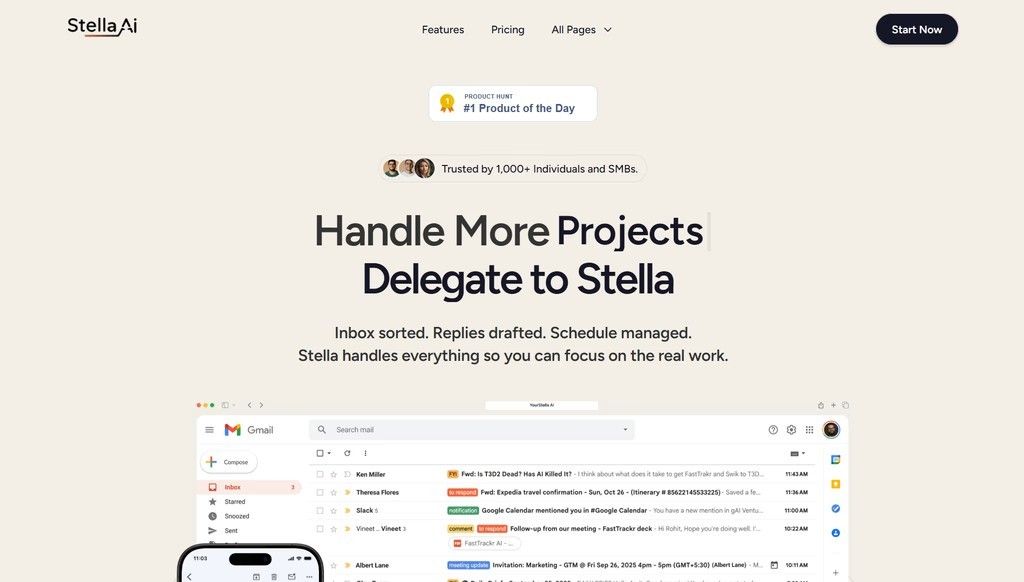
Stella AI: From an AI Executive Assistant to the Productivity Layer for Modern Work
How Stella AI evolved from a WhatsApp-based AI assistant to a full-fledged inbox intelligence platform used by 1,000+ professionals, and what it reveals about building serious AI products.
Tejas PatilDec 12, 20255 min read - 52
FastTrackr AI
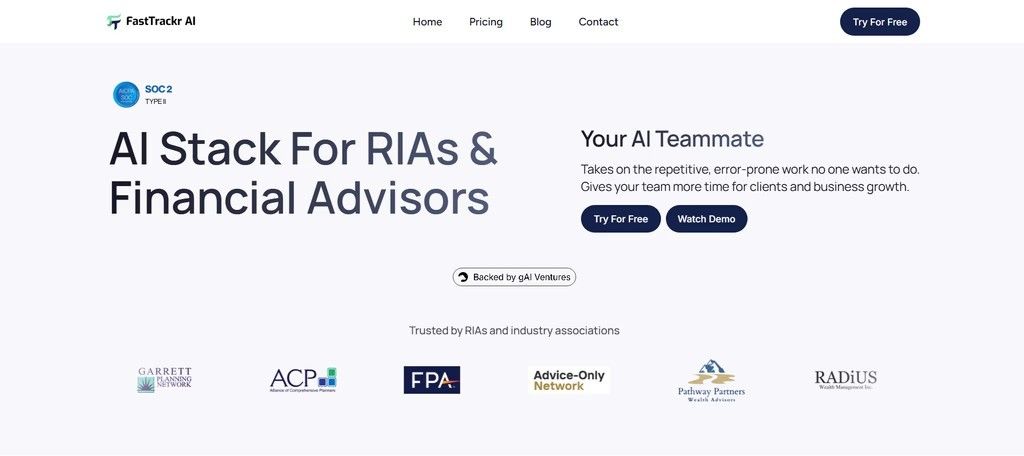
FastTrackr AI, AI Stack For RIAs & Financial Advisors
The financial advisory industry manages $144 trillion in assets and loses 25%+ of advisor time to non-advisory work. Here's how FastTrackr AI is changing that.
Tejas PatilDec 9, 20257 min read - 53
Vertical AI
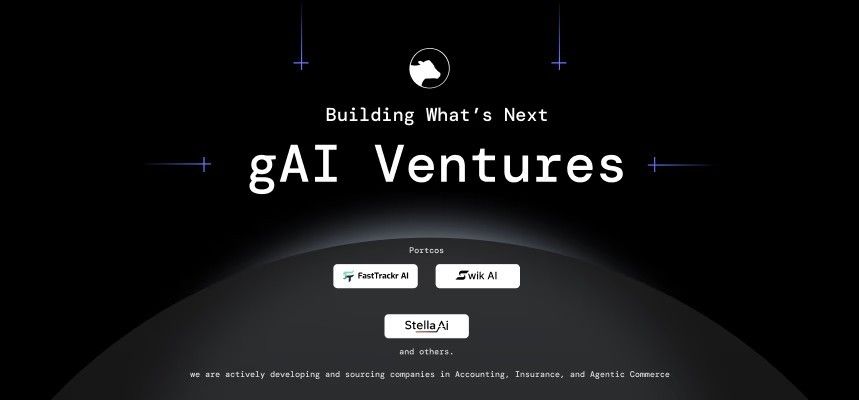
Building What's Next in AI at gAI Ventures
Most venture firms wait for a finished product and place a bet. gAI Ventures does something different, partnering at the very beginning of a company's life as an institutional co-founder.
Tejas PatilOct 16, 20258 min read